
Chipping and Wedges: Ball First, Low Point in Front
Rob Boldt’s short game is the reason he made it to the PGA Tour. From 150 yards and in is where scores drop, and it’s where most golfers have been handed the worst advice. Here’s how Rob teaches it.
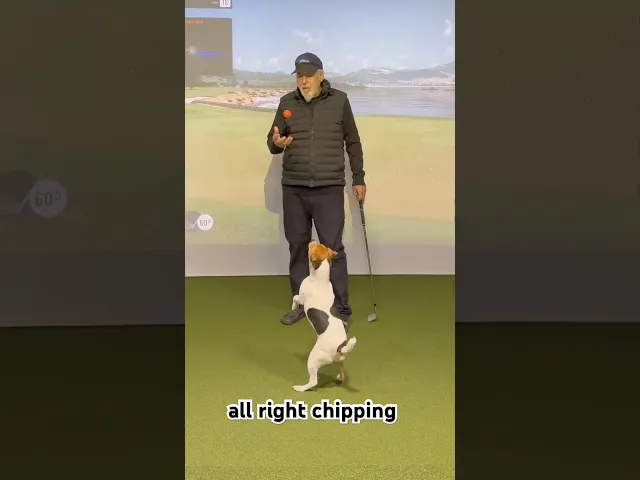
Chipping is an underhand throw
Picture a basket a few feet in front of you and a ball in your hand. You’d toss it underhand without thinking. Your wrists would move. Your head would move a little too. That’s very close to a good chip shot. Not everyone relates to the underhand toss, but a lot of people do.
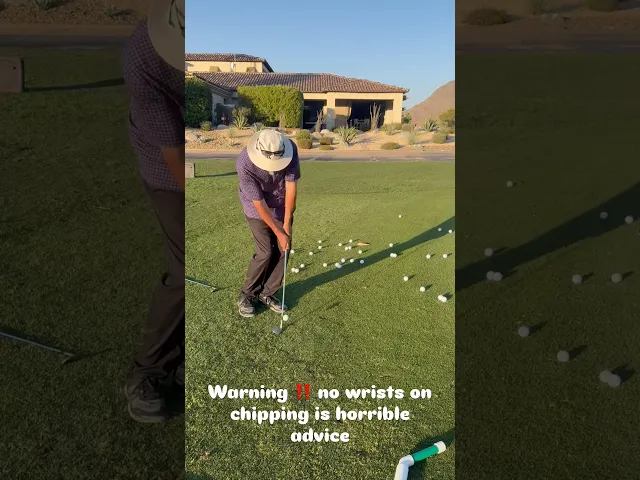
“No wrists” is bad advice
You’ll hear that you should chip with no wrists. Rob calls it some of the worst advice in golf. How much wrist you use changes from shot to shot, and there’s no single right amount. But no wrist at all doesn’t work.
Your head isn’t supposed to stand still
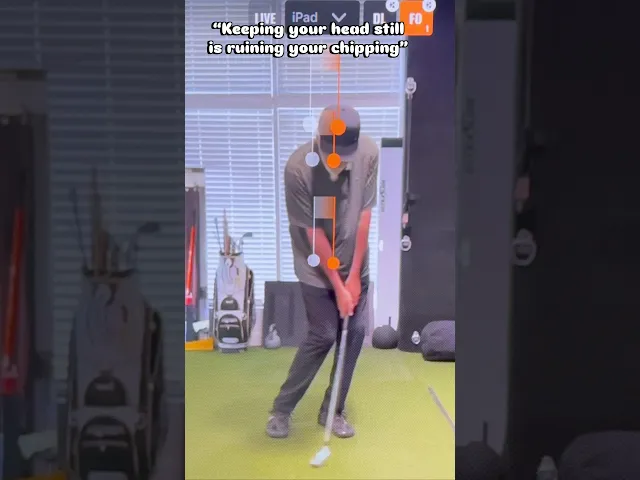
“Keep your head down” and “keep your head still” ruin more chips than almost anything. Watch Rob’s head in his three-dots video: it moves down, forward and up, the same as it would on an underhand toss. Freezing your head is one of the most common ways to hit it fat.
Ball first, low point in front
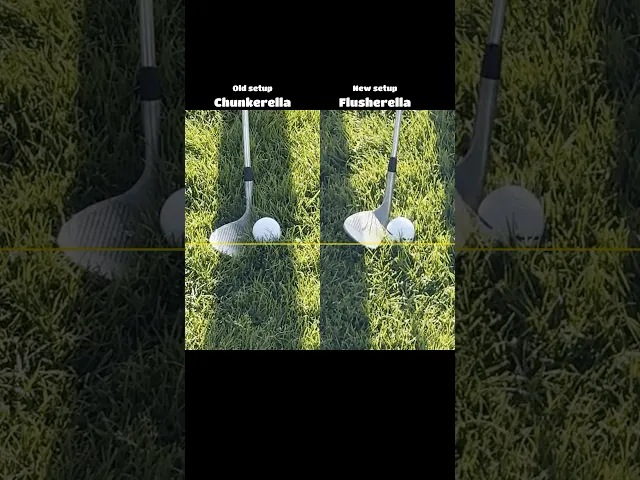
Hit the ball first, with the lowest point of your swing in front of the ball. When the ball is sitting down, that means ball, then ground, and the divot comes after the ball. When the ball is sitting up in the grass, you may not touch the ground at all. Either way, the low point is in front of the ball. Bunker shots, and a few shots where there’s too much in the way, are the exceptions.
Read the lie first
Before Rob picks a club, the ball tells him what shot is available. Is it sitting down in the grass or up off the ground? That changes where you need to bottom out.
Slopes matter too. When the ball is above your feet, you have to pinch it into the hill. Rob thinks of a scraper taking two inches of dirt off a hillside: come in from the angle of the slope. Come in straight on, and the toe of the club hits the ground first.
Rob’s order every time: read the lie, decide the shot, set up for it, then execute.
Follow the slope, every time
Rob sets up to follow the slope, whatever the slope is. “It’s just geometry and physics,” he says. Uphill, set your shoulders with the slope and swing up it, with the ball a little farther forward. Downhill, swing down the slope, with the ball farther back.
When the ball is below your feet, it tends to cut. Above your feet, it tends to hook. Either way, set up to the slope and pinch the ball into the hill so you still catch the ball first.
Bunker shots: the one place you hit behind it
In a greenside bunker you bottom out behind the ball instead of in front. You’ll hear that there’s a set distance to hit behind it. Rob says that isn’t really true: the closer to the ball you hit, the more spin and control you get. What matters most is taking an even amount of sand, and that means following the slope. Fight the slope and the club scoops up more sand, and you get less distance and less control.
(A fairway bunker is different. That one is a pick, ball first.)
Read the sand, too. Hard sand has its own bottom: a wedge with less bounce works better, and you can thud the ground a little and let it rebound the club. But hit too far behind the ball in hard sand and the club bounces into it and you skull it. Hard sand also makes the ball come out a little faster with more spin. Soft, fluffy sand has no bottom, so you have to make your own, and a wedge with more bounce helps. The ball comes out with less spin. The toughest bunker of all is one with too much sand.
Rob’s favorite bunker secret: he doesn’t stare at a spot behind the ball. During his routine, he pictures the slice of sand he’s going to take, where the club enters and where it exits. Then he steps in, stops thinking about mechanics, and just thuds that amount of sand. Hit it right and the sand makes a sound you’ll recognize. It’s a very cool sound. Turn your volume up for this one.
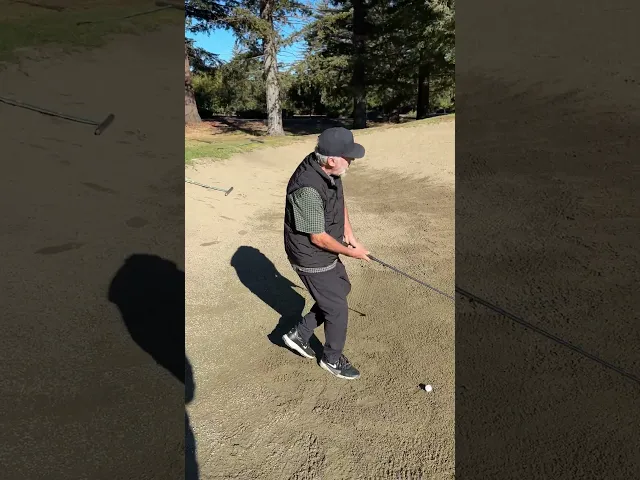
The chip and run, or “plain Jane”
Rob hits the easiest, highest-percentage shot available. Nothing to carry? He’ll use a less-lofted club and run it up. Something in the way? He goes over it. He never hits a high, fancy shot just for show.
One twist: Rob doesn’t use very low-lofted clubs around the green. A bit more loft gives you more margin for error, which is the opposite of what many golfers are taught.
The one-hand drill
If you tend to “hinge and hold,” squeeze the grip, or rush, try chipping with just your dominant hand. It feels a lot like the underhand toss, and for some golfers it clicks right away.
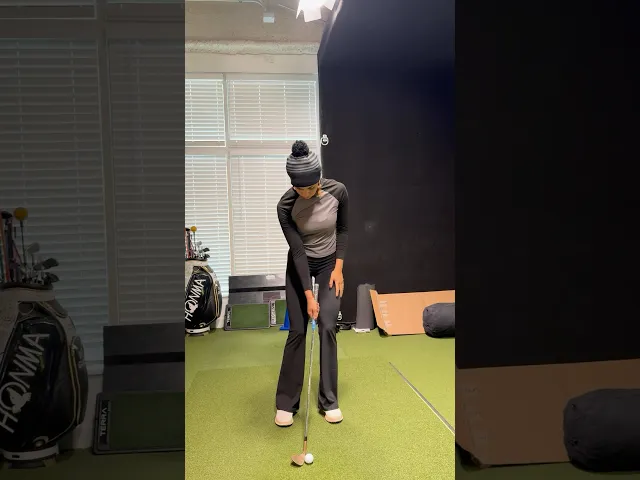
The clubface, made easy to see
People get told to “hinge and hold” and a dozen other things. In some videos Rob hangs a clothes hanger on the club. It’s just a visual aid, so you can see what the clubface is doing: opening going back and closing coming down.
Distance control: swing length, not the clock
Some golfers use a clock system for wedge distances. Rob has no problem with the clock. He just doesn’t use it himself. He thinks of throwing a baseball: from second base you take your arm back shorter than from right field. Shorter swing, shorter shot. Longer swing, longer shot.
Inside 150, what matters is carry: how far the ball flies in the air, and how much it spins. Give Rob two or three shots at 30 yards and he has the feel. Rob uses a combination of his eyes and the numbers, a lot like judging a shot at the basket.
Then practice every kind of shot: low, high, cuts and draws, and keep working on distance.
How Rob practices
Every tour player Rob has ever seen starts the day the same way: little chips, getting the grip and the feel of the club. Do the same before every round and every range session.
Rob doesn’t believe in ten million repetitions. If he’s working on a hard chip and hits a couple of good ones, he’s done. He doesn’t keep hitting until he misses. Being good on the practice tee means little to him. Pulling the shot off on the course, under pressure, is what counts. For most golfers, a good shot on the course is the same thing.
Work on your short game with Rob
Lessons are indoors at 3330 Mt. Diablo Blvd. in Lafayette, daily from 8 a.m. to 6 p.m. by appointment. Call or text Rob at (925) 808-1079, or send a message on robboldtgolf.com. More of Rob’s short-game videos are on his YouTube channel, youtube.com/@RobBoldt.
Book a Session